
Lion's Mane: Nature's Brain-Supporting Mushroom
By myXilluim Team1/1/202615 min read
# Lion's Mane: Nature's Brain-Supporting Mushroom
## 1. What Is Lion's Mane?
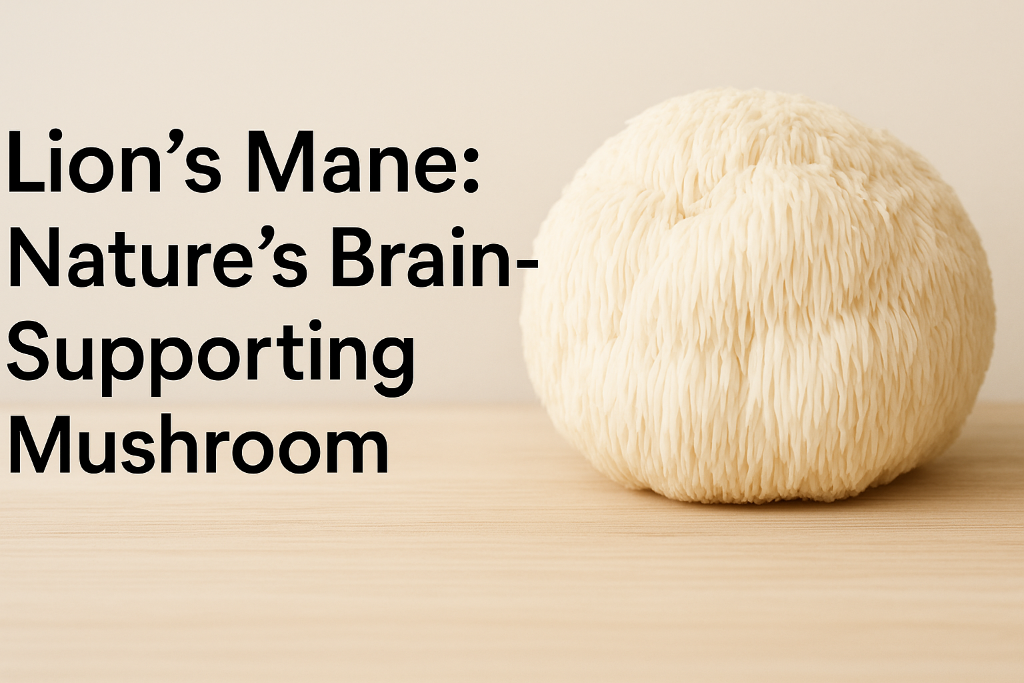
Hericium erinaceus is an edible and medicinal mushroom native to Asia, Europe and North America. It's characterized by long, cascading spines that look like a lion's mane.
Traditionally, it has been used in East Asian medicine to support digestive function and "nourish the organs," especially the stomach and spleen, and more recently it has gained fame as a potential "nootropic" or brain-supporting mushroom.
## 2. Key Bioactive Compounds in Lion's Mane
Lion's Mane is not one single compound – it's a complex mixture of bioactive molecules that seem to act on different systems:
### 2.1 Erinacines (mycelium-derived cyathane diterpenoids)
- Found mainly in the mycelium (the "root-like" growth rather than the fruiting body)
- Over a dozen erinacines have been identified (erinacine A–K, P–S)
- Erinacine A is the most studied and is considered a key driver of neuroprotective and neurotrophic effects (e.g., inducing nerve growth factor, NGF)
### 2.2 Hericenones (fruiting-body-derived aromatic compounds)
- Isolated mainly from the fruiting body
- Several hericenones (e.g., hericenone C, D, E) are reported to stimulate NGF synthesis in vitro and may contribute to cognitive support
### 2.3 Polysaccharides (β-glucans and related)
- High-molecular-weight polysaccharides, especially β-glucans, act as immunomodulators and prebiotics
- These can influence gut microbiota composition, intestinal barrier integrity, and downstream systemic inflammation
### 2.4 Phenolic compounds, sterols and peptides
- **Phenolics and flavonoids**: contribute to antioxidant and anti-inflammatory activity
- **Ergosterol and derivatives**: have antioxidant and potential cytoprotective effects
- **Bioactive peptides**, such as KSPLY, show gastroprotective and anti-Helicobacter pylori activity
A 2024 review identified over 250 secondary metabolites across Hericium species, highlighting how chemically rich Lion's Mane really is.
## 3. How Does Lion's Mane Work in the Body?
Lion's Mane doesn't act like a single drug hitting one receptor. It seems to work systemically, mainly by:
- Increasing neurotrophic factors (NGF, BDNF)
- Modulating inflammatory pathways (NF-κB, Nrf2, TLR4)
- Interacting with gut microbiota and the gut–brain–liver axis
- Influencing immune cells through β-glucan pattern recognition receptors
### 3.1 Absorption and Ability to Reach the Brain
Recent work suggests that hericenones and erinacines can cross the blood–brain barrier (BBB) and increase levels of NGF and BDNF in brain tissue.
Erinacine-enriched extracts increase NGF levels and hippocampal neurogenesis in animal models of Alzheimer-like pathology and aging.
Once in the CNS, they indirectly activate Trk receptors (TrkA for NGF, TrkB for BDNF), which then signal via:
- **Ras/MAPK–ERK pathway** (supporting neuronal differentiation and plasticity)
- **PI3K/Akt pathway** (supporting cell survival and anti-apoptotic signaling)
- **cAMP/PKA–CREB signaling** (related to learning and memory)
These effects are not because Lion's Mane directly binds Trk receptors, but because it increases the neurotrophins (NGF, BDNF) that bind them.
## 4. Effects on the Nervous System
### 4.1 NGF, BDNF and Neurogenesis
Multiple in-vitro and animal studies show that Lion's Mane:
- Stimulates NGF synthesis in astrocytes and other cells via erinacines and hericenones
- Increases BDNF and pro-BDNF levels in brain tissue, which may support synaptic plasticity
- Promotes neurite outgrowth, dendritic branching and neuronal survival in cultured neurons
Functionally, that translates into:
- Enhanced hippocampal neurogenesis (formation of new neurons in the hippocampus, a key memory center)
- Better synaptic plasticity in memory-related regions
- Possible support for myelination and remyelination in some models
### 4.2 Neuroprotection and Anti-Amyloid Effects
Preclinical studies suggest Lion's Mane extracts can:
- Reduce Aβ (amyloid-β) plaque load and associated gliosis in Alzheimer-like mouse models
- Decrease markers of oxidative stress and lipid peroxidation in brain tissue
- Inhibit apoptotic pathways in neurons (e.g., modulating Bcl-2/Bax ratios and caspase activation)
Mechanistically, this appears to involve:
- Activation of Nrf2/HO-1 signaling → boosts endogenous antioxidant defenses
- Inhibition of NF-κB activation → reduction of pro-inflammatory cytokines (TNF-α, IL-1β, IL-6)
### 4.3 Microglia, Astrocytes and Neuroinflammation
Erinacine-rich preparations have been shown to:
- Reduce microglial over-activation, shifting microglia from a strongly pro-inflammatory phenotype towards a more neuroprotective profile
- Down-regulate pro-inflammatory cytokines and up-regulate neurotrophic support in glial cells
This is important because chronic microglial activation is implicated in multiple neurodegenerative conditions.
## 5. Gut, Immunity and the Gut–Brain Axis
One of the most exciting areas of Lion's Mane research is its impact on the gut microbiota and immune system, which indirectly affects the brain and liver.
### 5.1 Modulation of Gut Microbiota
Lion's Mane polysaccharides act as prebiotics, supporting beneficial bacteria:
- Animal and human data suggest an increase in beneficial genera (e.g., Lactobacillus, Bifidobacterium) and a reduction in inflammatory or opportunistic taxa
- Changes in microbiota are associated with improvements in cognitive performance and metabolic parameters in preclinical models
### 5.2 Intestinal Barrier and Inflammatory Bowel Disease Models
In rodent models of colitis and inflammatory bowel disease, Lion's Mane extracts:
- Improve tight junction integrity and mucosal barrier function
- Reduce NF-κB activation in colonic tissue, lowering TNF-α and other inflammatory cytokines
- Increase anti-inflammatory cytokines such as IL-10 and regulatory T-cell marker Foxp3
This suggests action on immune receptors such as:
- Dectin-1 and TLR2/TLR4 on macrophages, dendritic cells and intestinal epithelial cells, which recognize fungal β-glucans and modulate downstream NF-κB and MAPK signaling
### 5.3 Gut–Liver Axis and Metabolic Inflammation
A 2024 study on Lion's Mane polysaccharides showed:
- Restoration of gut barrier function → reduced leakage of lipopolysaccharide (LPS) into the portal circulation
- Suppression of hepatic LPS/TLR4/MyD88/NF-κB signaling
- Reduced hepatic inflammation and apoptosis, pointing to potential support in metabolic liver disease models
## 6. Gastroprotection and the Stomach
Beyond the colon, Lion's Mane also shows gastroprotective actions:
A 2025 study identified a peptide from H. erinaceus (KSPLY) that protects gastric epithelial cells from Helicobacter pylori–induced barrier injury:
- Maintains tight junction proteins
- Reduces oxidative stress and cell apoptosis in gastric mucosa
This fits with its traditional use as a mushroom for digestive comfort and stomach health.
## 7. Mood, Anxiety and Cognitive Function in Humans
While the mechanistic data are strong in cells and animals, human data are still early and mixed. However, several small trials are worth noting.
### 7.1 Mild Cognitive Impairment (MCI)
A classic double-blind, placebo-controlled trial in older adults (50–80 years) with mild cognitive impairment used Lion's Mane fruiting-body tablets (3 g/day equivalent) for 16 weeks. Results showed:
- Significant improvement in cognitive scores (Revised Hasegawa Dementia Scale) compared to placebo
- Cognitive benefits declined after supplementation stopped, suggesting a functional, not permanent effect
### 7.2 Depression and Anxiety Symptoms
A small 4-week study in women found that Lion's Mane intake (cookies containing Lion's Mane) led to:
- Reduced scores on depression and anxiety scales (CES-D and ICI)
- Improvements in feelings of irritation, anxiety and difficulty concentrating compared to placebo
Another 8-week study in overweight adults with mood and sleep disorders reported:
- Decreases in depression, anxiety and binge-eating scores
- Improvements in sleep quality after Lion's Mane supplementation
A 2019 review and more recent 2024 overview of mushroom effects on mood conclude that Lion's Mane shows promising but preliminary effects on mood and cognition in middle-aged and older adults, but the trials are small and heterogeneous.
### 7.3 Acute Cognitive Effects
A 2025 double-blind trial assessing acute (single-dose) effects of Lion's Mane fruiting-body extract did not find broad improvements in cognition or mood versus placebo, suggesting that chronic intake may be required to see meaningful effects.
## 8. Which Systems and Pathways Does Lion's Mane Touch?
To summarize, here are the main body systems and signaling pathways influenced by Lion's Mane, based on current research:
### Nervous System
- **Neurotrophins**: ↑ NGF, ↑ BDNF, modulation of pro-BDNF
- **Receptor pathways (indirectly)**:
- NGF → TrkA → Ras/MAPK, PI3K/Akt, PLCγ
- BDNF → TrkB → similar downstream cascades supporting neuronal survival and plasticity
- **Cellular effects**: ↑ neurite outgrowth, ↑ neurogenesis, ↓ neuronal apoptosis, ↓ oxidative damage
### Immune / Inflammatory System
- **Pattern recognition receptors**: β-glucans engage dectin-1, TLR2/4 on immune cells
- Down-regulation of NF-κB, decreased TNF-α, IL-1β, IL-6; up-regulation of IL-10 and regulatory T-cell activity in gut models
- Modulation of microglial and macrophage activation states in CNS and gut
### Antioxidant and Cytoprotective Pathways
- Activation of Nrf2/HO-1 pathway → increased expression of antioxidant enzymes (e.g., heme oxygenase-1, superoxide dismutase)
- Reduced markers of lipid peroxidation and oxidative DNA damage in multiple tissues
### Gut–Microbiota–Liver Axis
- Prebiotic effects on gut microbiota composition
- Improved intestinal barrier function; reduced LPS translocation
- Down-regulated LPS/TLR4/MyD88/NF-κB signaling in the liver with reduction in inflammatory and apoptotic markers
### Gastrointestinal Mucosa
- Protection of gastric epithelial tight junctions and barrier integrity, including in H. pylori–related injury models, via antioxidant and anti-apoptotic signaling
## 9. Safety, Dosage and Limitations of the Evidence
### 9.1 Safety
Overall, Lion's Mane appears well-tolerated in human trials, with few reported adverse events at typical supplemental doses (often in the 1–3 g/day range of fruiting-body powder or standardized extract, sometimes higher in research settings).
However:
- Long-term, high-dose safety data are still limited
- People with mushroom allergies, autoimmune conditions, or on immune-modulating or anticoagulant medications should speak with a healthcare professional before use
### 9.2 Limitations of Current Science
Even though mechanistic data are impressive, keep in mind:
- Human trials are small, short and heterogeneous in dosage, extract type (fruiting body vs mycelium, erinacine-enriched vs general powder), and population
- Most strong mechanistic claims (e.g., plaque reduction, detailed pathway modulation) come from animal or cell studies, not large human clinical trials
- Ongoing and new randomized controlled trials (including modern direct-to-consumer product studies) are still in progress
So, Lion's Mane should be seen as a promising functional ingredient with strong preclinical support and early positive human data – not as an approved treatment for any disease.
## 10. Take-Home Message
Lion's Mane is more than a "brain mushroom." Based on current research, it:
- Supports neurotrophic signaling by increasing NGF and BDNF
- Exerts neuroprotective effects through antioxidant and anti-inflammatory pathways
- Modulates gut microbiota, intestinal barrier function and immune responses, feeding into the gut–brain and gut–liver axes
- Shows preliminary benefits for cognition, mood, anxiety and sleep in small human studies, with ongoing trials aiming to clarify its real-world impact
As the clinical research grows, Lion's Mane is emerging as a multi-target, systems-level natural compound – especially interesting for those studying or supporting brain health, gut health and chronic inflammation from a holistic but mechanistically grounded perspective.