
Chaga Mushroom: A Scientific Deep Dive
By myXilluim Team1/1/202615 min read
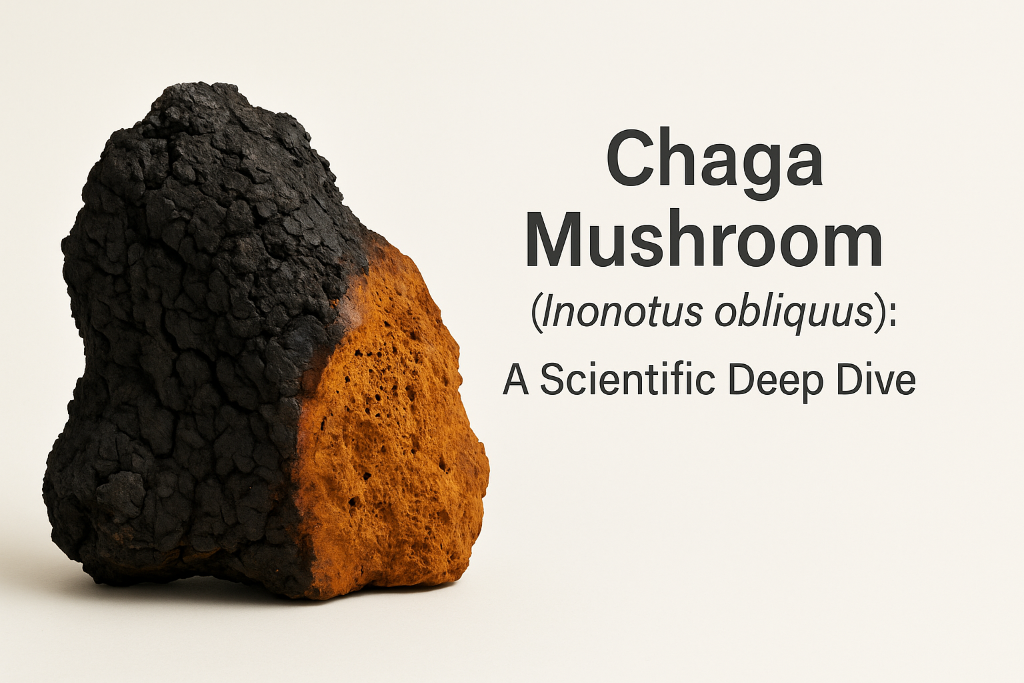
# Chaga Mushroom (Inonotus obliquus): A Scientific Deep Dive
## 1. What Is Chaga?
Chaga (Inonotus obliquus) is a parasitic fungus that grows mainly on birch trees in cold regions (Russia, Northern Europe, Korea, China, North America). The black, charcoal-like mass people call "chaga" is actually a sterile conk formed by the fungus and the host tree.
Traditional folk medicine (especially in Russia and parts of Asia) has used chaga as a tea or extract for stomach complaints, infections and as a general tonic. Modern research now looks at chaga as a source of antioxidant, immunomodulatory, anti-inflammatory, metabolic and potential anti-cancer compounds.
## 2. Key Bioactive Compounds
Chaga is chemically rich. Major groups of compounds include:
### 2.1 Polysaccharides (especially β-glucans)
High-molecular-weight β-(1→3)(1→6)-glucans and other heteropolysaccharides are considered the most bioactive fraction for immune modulation, antioxidant and hypoglycemic effects.
These β-glucans behave as pathogen-associated molecular patterns (PAMPs) and interact with immune pattern-recognition receptors (PRRs) such as dectin-1 and TLR2/TLR4 on macrophages, dendritic cells and other immune cells.
### 2.2 Polyphenols and melanins
Chaga is unusually rich in polyphenolic antioxidants, including hispidin and related phenolic compounds.
It contains a large amount of dark, water-soluble melanin, which can scavenge free radicals and bind metal ions, contributing to antioxidant and possible radioprotective effects.
### 2.3 Triterpenoids
Lanostane-type triterpenoids are a signature group in chaga:
- Inotodiol (unique to chaga)
- Betulin and betulinic acid (derived from birch bark)
- Other lanostane triterpenoid acids
These molecules show anti-inflammatory, hypolipidemic, anti-allergic and cytotoxic (anti-tumor) activities in vitro and in animal models.
### 2.4 Sterols and other components
Ergosterol and ergosterol peroxide contribute to anti-proliferative and pro-apoptotic activity in cancer cell models.
Minor components include lignans (e.g., arctigenin), phenolic acids, and flavonoids with additional antioxidant and potential hormone-modulating effects.
## 3. Mechanistic Overview – How Chaga Acts in the Body
Chaga does not work through a single receptor or linear pathway. Based on current evidence, its main actions are:
- **Powerful antioxidant & cytoprotective effects** (direct radical scavenging and indirect activation of Nrf2/antioxidant enzymes)
- **Immunomodulation** via β-glucans/PRRs and triterpenoids – balancing innate and adaptive responses
- **Anti-inflammatory signaling**, reducing NF-κB and related cytokines
- **Metabolic regulation** – effects on blood glucose, lipids, adipocyte differentiation and uric acid in animal models
- **Anti-tumor mechanisms** – cell cycle arrest, apoptosis, anti-angiogenesis and metabolic reprogramming in cancer cells and tumor-bearing animals
Below we break these down by system.
## 4. Antioxidant and Cytoprotective Effects
### 4.1 Direct ROS scavenging and oxidative DNA protection
Chaga extracts (especially polyphenol-rich and melanin-rich fractions) show very high in vitro antioxidant capacity, often among the strongest measured for medicinal mushrooms.
In cultured mammalian cells, chaga extract significantly reduces H₂O₂-induced DNA damage and fragmentation, indicating protection against oxidative DNA breaks.
In zebrafish models, chaga polysaccharides lower intracellular reactive oxygen species (ROS), reduce apoptosis and support normal embryonic development under oxidative stress.
### 4.2 Nrf2 and endogenous antioxidant systems
Studies show chaga polysaccharides and polyphenols:
- Up-regulate the Nrf2/HO-1 pathway, increasing endogenous antioxidant enzymes such as superoxide dismutase (SOD), catalase and glutathione peroxidase
- Decrease markers of lipid peroxidation and oxidative damage in liver and other tissues in toxin-exposed mice
This antioxidant and cytoprotective activity is a central reason chaga is studied in models of liver injury, neurotoxicity and metabolic disease.
## 5. Immunomodulatory Actions
### 5.1 β-Glucans as PAMPs and immune training
Chaga β-glucans bind to immune receptors like dectin-1 and TLR2/TLR4, triggering:
- Activation of macrophages and dendritic cells
- Increased production of cytokines (e.g., TNF-α, IL-6, IL-1β, NO) at low/moderate doses
- Enhanced activity of NK cells and T cells in some models
These actions may contribute to better innate immune surveillance, which is one reason β-glucans from several mushrooms are used in oncology as immune adjuvants in Asia (although most clinical data there come from other species like Lentinula and Trametes, not specifically chaga).
### 5.2 Inotodiol and mast-cell modulation
The triterpenoid inotodiol, unique to chaga, shows interesting anti-allergic effects:
- In mouse models of food allergy, purified inotodiol selectively inhibits mast-cell function, reducing systemic anaphylaxis, intestinal inflammation and IgE-mediated responses, with minimal suppression of other immune functions
- Crude chaga extracts have broader immunosuppressive effects in the same models, suggesting multiple immunomodulatory components acting at different targets
This points to potential future applications in allergic and mast-cell–mediated diseases, though no human trials exist yet.
## 6. Anti-Inflammatory Effects
Chaga constituents modulate inflammation at several levels:
- Suppress NF-κB activation, thereby reducing expression of pro-inflammatory cytokines (TNF-α, IL-1β, IL-6) and iNOS/COX-2 in cell and animal models of inflammation
- In microcystin-LR–induced liver injury, an ethyl-acetate extract of chaga restored liver enzymes, decreased oxidative stress, and reduced inflammatory signaling, suggesting hepatoprotective and anti-inflammatory action
These properties make chaga a candidate for chronic low-grade inflammation and liver protection, but again, this is based mainly on preclinical work.
## 7. Metabolic and Cardiovascular Effects
### 7.1 Glucose metabolism and insulin signaling
Chaga polysaccharides are repeatedly reported as hypoglycemic in diabetic rodent models:
- In alloxan- or streptozotocin-induced diabetic mice, chaga polysaccharide complexes reduce fasting blood glucose, improve pancreatic histology and increase insulin secretion
- Extracts may enhance adipocyte differentiation and insulin sensitivity in 3T3-L1 adipocytes, providing a mechanism for improved glucose uptake
### 7.2 Lipid metabolism
- In hyperlipidemic animal models, chaga extracts and triterpenoids reduce total cholesterol, LDL, triglycerides and sometimes raise HDL
- Triterpenoid acids from chaga (TAIO) show hypouricemic effects in hyperuricemic mice by modulating xanthine oxidase and urate transporters, potentially relevant to gout and metabolic syndrome
### 7.3 Cardiovascular risk and mitochondrial energy
The 2025 Antioxidants paper looked at a formulation combining chaga extract with CoQ10 and alpha-lipoic acid in neuronal cells:
- The formula improved mitochondrial membrane potential, ATP production and reduced ROS in SH-SY5Y cells, pointing to mitochondrial support and antioxidant synergy
This is not a human trial, but it supports the idea that chaga can be part of strategies aimed at energy metabolism and oxidative stress.
## 8. Anti-Cancer Properties (Preclinical)
Chaga is often marketed for cancer support, so it's important to separate preclinical evidence from human data.
### 8.1 In vitro anti-tumor mechanisms
Chaga extracts and isolated compounds show activity against many cancer cell lines:
- **Oral cancer cells (HSC-4)**: chaga extract reduces viability and proliferation, induces G0/G1 cell-cycle arrest, inhibits glycolysis and mitochondrial membrane potential, and triggers autophagy-mediated apoptosis via AMPK activation, p38 MAPK and NF-κB signaling. It also suppresses STAT3 phosphorylation, which is central to tumor growth and metabolism
- **Colon cancer cells (HT-29)**: ethanol extracts cause G1 arrest with down-regulation of CDK2/4 and cyclin D1 and up-regulation of p21, p27 and p53, leading to reduced proliferation
- **Lung cancer cell lines**: methanol extracts enriched in triterpenoids (including a novel chagabuzone A) induce caspase-3–mediated apoptosis with IC₅₀ values in the low to mid-micromolar range
- **HeLa and other lines**: inotodiol induces apoptosis via p53-dependent pathways, reduces migration and invasion, and down-regulates β-catenin and its targets (c-Myc, cyclin D1)
Overall, chaga components influence cell cycle, apoptosis, metabolic pathways and metastatic behavior in multiple tumor models.
### 8.2 Animal tumor models
In rodent tumor-bearing models:
- Oral administration of chaga extract has produced up to ~60% tumor volume reduction in certain models and reduced metastatic nodules by ~25%, along with inhibition of tumor vascularization
- Aqueous extract of chaga taken continuously in mice has been reported to suppress cancer progression and help maintain body temperature, though details remain preclinical
Despite these promising results, they do not equal proof in humans. Doses, routes and extract types may differ substantially from human supplements.
### 8.3 Human evidence in oncology
Modern, well-controlled clinical trials in cancer patients using standardized chaga products are essentially absent.
Memorial Sloan Kettering Cancer Center notes that chaga's safety and efficacy have not been evaluated in rigorous clinical studies, and that its current role is primarily investigational or traditional.
In Russia and some Eastern European countries, chaga extract ("Befungin") has been used historically as an adjunct for gastritis, gastric ulcers, polyposis and as a nonspecific support in precancerous conditions, but published data are mainly observational and pre-modern by current clinical standards.
So at this stage, chaga should be seen as a potential supportive agent with strong mechanistic rationale and animal data, not as a proven cancer treatment.
## 9. Liver, Gut and Other Organ Protection
### 9.1 Hepatoprotection
Several models show chaga protecting the liver from toxins:
- In microcystin-LR-exposed mice, chaga extract restored liver enzymes (ALT, AST), preserved glutathione levels, reduced ROS and attenuated inflammation, suggesting protection against severe oxidative hepatotoxicity
- Chaga polysaccharides reduce tacrine-induced hepatocyte apoptosis by lowering ROS, preserving mitochondrial membrane potential, and limiting cytochrome c release and caspase-3 activation in HepG2 cells
### 9.2 Gastrointestinal effects
- Historically, chaga has been used for gastritis and peptic ulcers, and experimental ethanol-induced ulcer models in rats show anti-ulcer activity of chaga ethanol extract without overt toxicity at tested doses
- Chaga polysaccharides are also prebiotic, and like other mushroom β-glucans may shift gut microbiota composition, although data are less developed compared with some other species
## 10. Human Evidence: What Do We Actually Know?
Compared with the impressive mechanistic and animal data, human research on chaga is surprisingly sparse:
There are no large randomized controlled trials on chaga as a single standardized product for any disease endpoint (cancer, diabetes, cardiovascular disease, etc.) as of late 2025. Reviews repeatedly emphasize this gap.
Most evidence in humans is:
- Historical/observational (e.g., decades of use of Befungin)
- Extrapolated from general β-glucan research, or
- Based on combination products where chaga is only one ingredient (making it hard to isolate its contribution)
So while it's likely that chaga can support antioxidant status, immune balance and metabolic health in humans, we cannot quantify the effect or guarantee clinical benefits yet.
## 11. Safety, Risks and Dosing Considerations
### 11.1 General safety
Most reviews consider chaga generally well tolerated at typical supplemental doses, with no acute toxicity seen in standard rodent toxicity studies of chaga polysaccharides and triterpenoids.
However, modern authorities stress that long-term human safety and optimal dosing are not established.
### 11.2 Oxalate and kidney risk
A major concern is very high oxalate content in some chaga preparations:
- Case reports describe oxalate nephropathy (kidney failure) in people consuming large amounts of chaga tea over long periods; biopsies showed extensive oxalate crystal deposition
- A public health risk assessment warns that heavy, chronic chaga consumption could pose kidney risk, especially in people with existing renal impairment or high oxalate exposure from diet
### 11.3 Drug interactions and other cautions
Based on its pharmacology:
- **Blood sugar**: chaga may enhance insulin sensitivity and lower glucose; this could potentiate hypoglycemia if combined with insulin or oral antidiabetics
- **Anticoagulation**: chaga has reported antiplatelet/anticoagulant effects in vitro; caution is advised with warfarin or other blood thinners
- **Immunomodulation**: because β-glucans stimulate immune function, people on immunosuppressive therapy (e.g., post-transplant, autoimmune disease) should be cautious and consult a physician
- **Allergy**: as with any mushroom, allergic reactions are possible
### 11.4 Practical guidance (non-medical)
From a conservative, research-aligned point of view:
- Prefer standardized extracts from reputable producers (tested for heavy metals, pesticides, microbiological contamination and oxalate levels)
- Avoid extreme doses and continuous heavy consumption of wild chaga tea without medical supervision, especially if you have kidney issues, take blood thinners or diabetes medications
- Pregnant, breastfeeding individuals, and those with serious chronic illness should consult a healthcare professional before use, because data are insufficient
## 12. Take-Home Summary
- Chaga is a chemically complex medicinal fungus rich in β-glucans, polyphenols, melanins and lanostane triterpenoids such as inotodiol and betulinic acid
- Mechanistically, it shows strong antioxidant, anti-inflammatory, immunomodulatory, metabolic and anti-tumor properties in cell and animal models
- It acts through:
- Nrf2/HO-1 and antioxidant enzyme up-regulation
- NF-κB and inflammatory cytokine down-regulation
- β-glucan interaction with dectin-1/TLRs and immune training
- Modulation of STAT3, AMPK, p38, p53 and β-catenin in cancer models
- **Human clinical evidence is still very limited.** We do not yet have robust RCTs establishing benefits for specific diseases, though traditional use and mechanistic studies are encouraging
- **Safety is not fully defined.** Normal supplemental use appears well tolerated in most contexts, but high oxalate content and potential interactions with medications mean it should be used thoughtfully, not indiscriminately
For a serious wellness brand, the most scientifically honest position is:
**Chaga is a promising, multi-target functional mushroom with strong preclinical support for antioxidant, immune and metabolic benefits – but its effects in humans still need high-quality clinical trials, and it must be used with attention to safety and dose.**