
Chaga vs Turkey Tail: Two Powerhouse Immune Mushrooms Compared
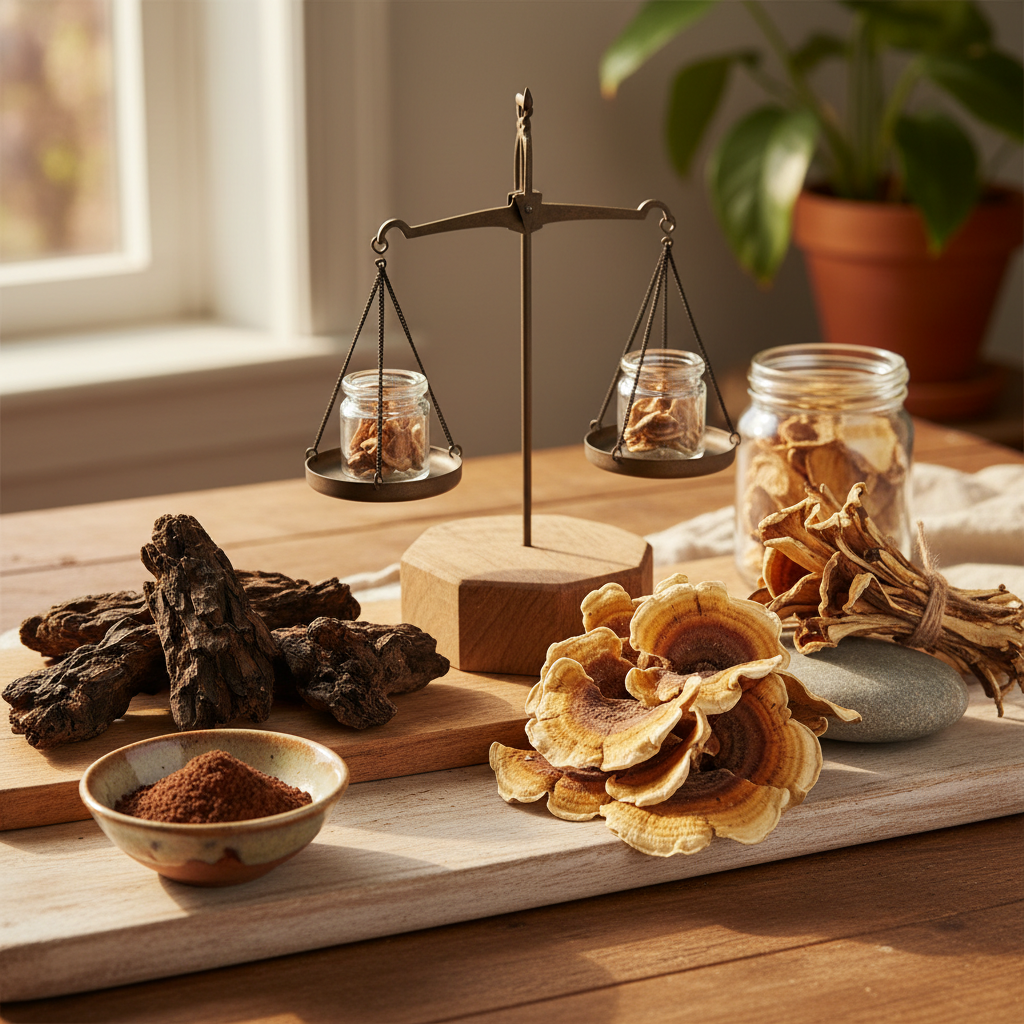
Two Mushrooms, One Goal: Immune Optimisation
Chaga (Inonotus obliquus) and turkey tail (Trametes versicolor) are two of the most researched functional mushrooms for immune support. Both are adaptogenic, both work via polysaccharide mechanisms — but their specific actions, compounds, and best-use cases differ meaningfully. Here's a science-based comparison.
Chaga: The Antioxidant Titan
Chaga grows predominantly on birch trees in cold northern climates (Siberia, Canada, Scandinavia). It's not technically a mushroom fruiting body — it's a sclerotium, a dense mass of mycelium. This matters because its bioactive profile is dominated by:
- Betulinic acid — derived from the birch bark it grows on, studied for anti-tumour and anti-inflammatory properties
- Melanin complexes — among the highest concentrations found in nature, with potent antioxidant activity
- Beta-glucans — polysaccharides that modulate immune cell activity
- SOD (superoxide dismutase) — an enzyme that protects cells from oxidative damage
Chaga's ORAC score (antioxidant capacity) is extraordinarily high — significantly greater than blueberries or acai. Its primary strengths are antioxidant protection, inflammation reduction, and broad immune modulation.
Turkey Tail: The Clinical Frontrunner
Turkey tail is arguably the most clinically researched medicinal mushroom in the world. Its key compounds are:
- PSK (Polysaccharide-K / Krestin) — approved in Japan as an adjunct cancer therapy; shown in multiple RCTs to enhance immune cell activity during chemotherapy
- PSP (Polysaccharide Peptide) — demonstrated in trials to stimulate NK cells and T-lymphocytes
- Prebiotic fibres — turkey tail has demonstrated ability to positively shift the gut microbiome, which is directly connected to immune function
Turkey tail's strengths are specific immune stimulation, gut-immune axis support, and clinical validation.
Key Differences at a Glance
- Research depth: Turkey tail leads, with human clinical trials; chaga is better studied in vitro and in animals
- Primary action: Chaga = antioxidant + immune modulation; Turkey tail = immune stimulation + gut health
- Taste: Chaga makes an earthy, vanilla-tinged tea; turkey tail is more bitter and typically taken as a capsule or extract
- Caffeine-free: Both are naturally caffeine-free, unlike some mushroom blends
Can You Take Both Together?
Absolutely — and there's logic in stacking them. Chaga provides antioxidant protection and foundational immune modulation, while turkey tail specifically activates immune cell activity and feeds a healthy microbiome. Together they cover complementary immune pathways.
A practical stack: chaga extract in your morning tea + turkey tail capsule with a meal. Many premium functional mushroom blends already combine both for this reason.
What to Look For in a Quality Product
- Hot water extract or dual extract (not raw mushroom powder, which has poor bioavailability)
- Beta-glucan content listed on the label — aim for ≥20-30%
- Fruiting body preferred over mycelium-on-grain for turkey tail
- Third-party lab testing for heavy metals (especially for chaga, which bioaccumulates from its host tree)
Verdict
If forced to choose one: choose turkey tail for the strongest clinical immune evidence. But if you're serious about functional mushroom supplementation, both earn their place in your protocol — and they work better together than apart.